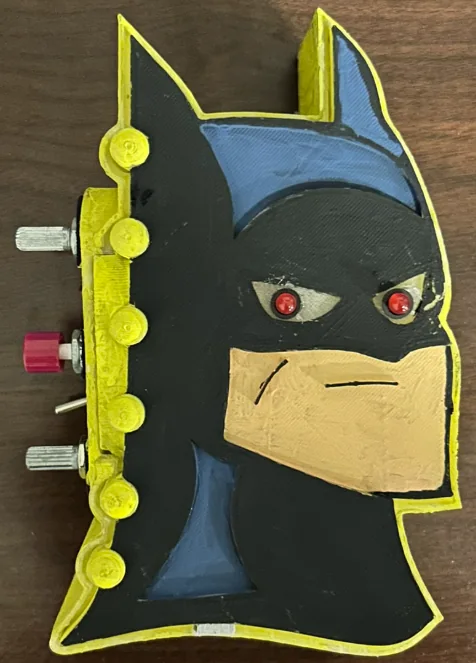
The assignment. An open-ended design exercise that packs the core of med-tech prototyping into one small device: an enclosure housing a custom PCB and battery that drives three LEDs from a switch, a button, and two potentiometers. Constraints: no dimension over 15 cm, a snug-fitting enclosure, and every internal component intentionally mounted.
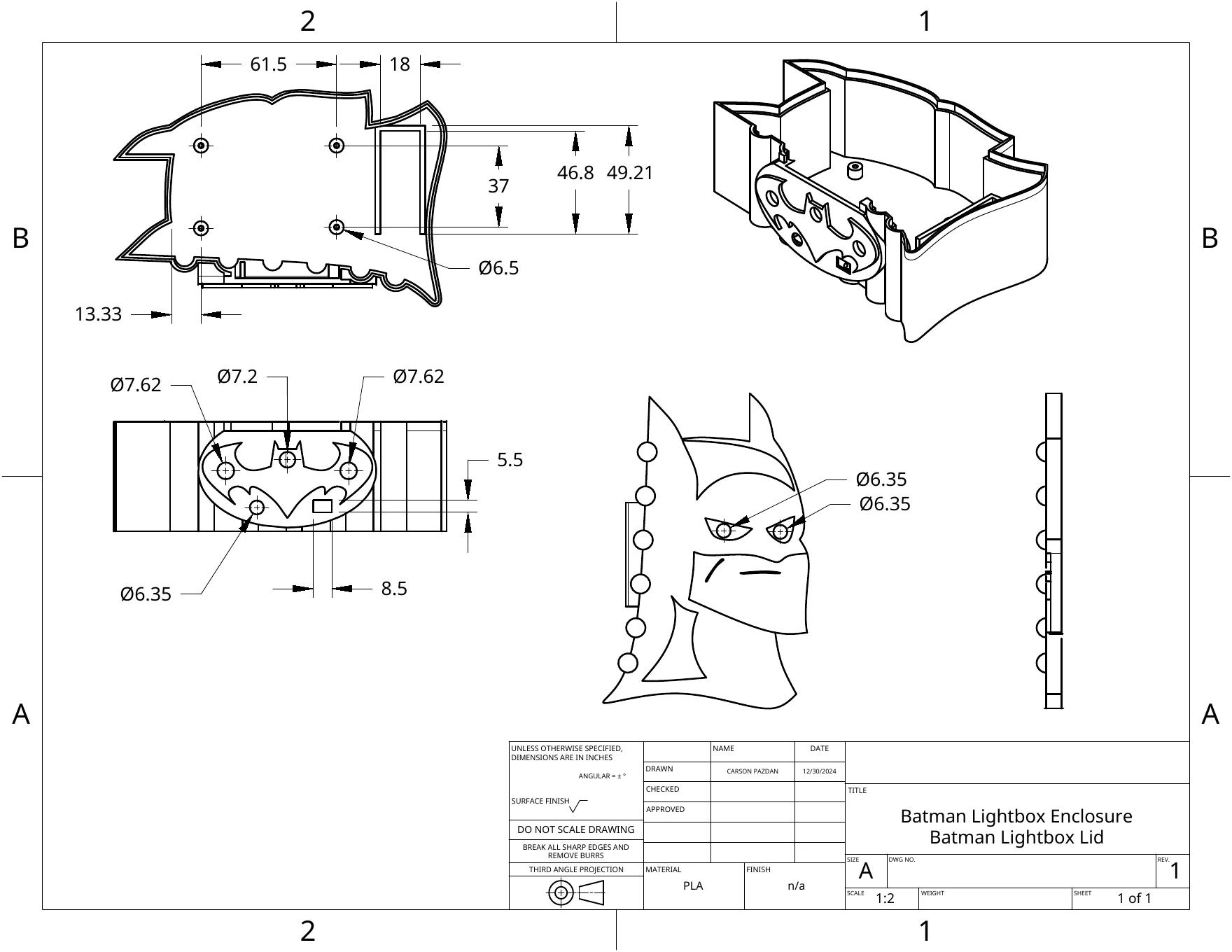
Enclosure (CAD). I modeled it on Batman's head, with the utility belt on the side carrying the button and knobs. Four heat-set inserts secure the PCB, a slot holds the 9V battery, and the lid seats with a wedge. In hindsight, I'd add a port in the base for reprogramming without disassembly.
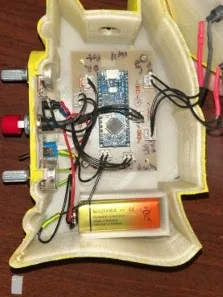
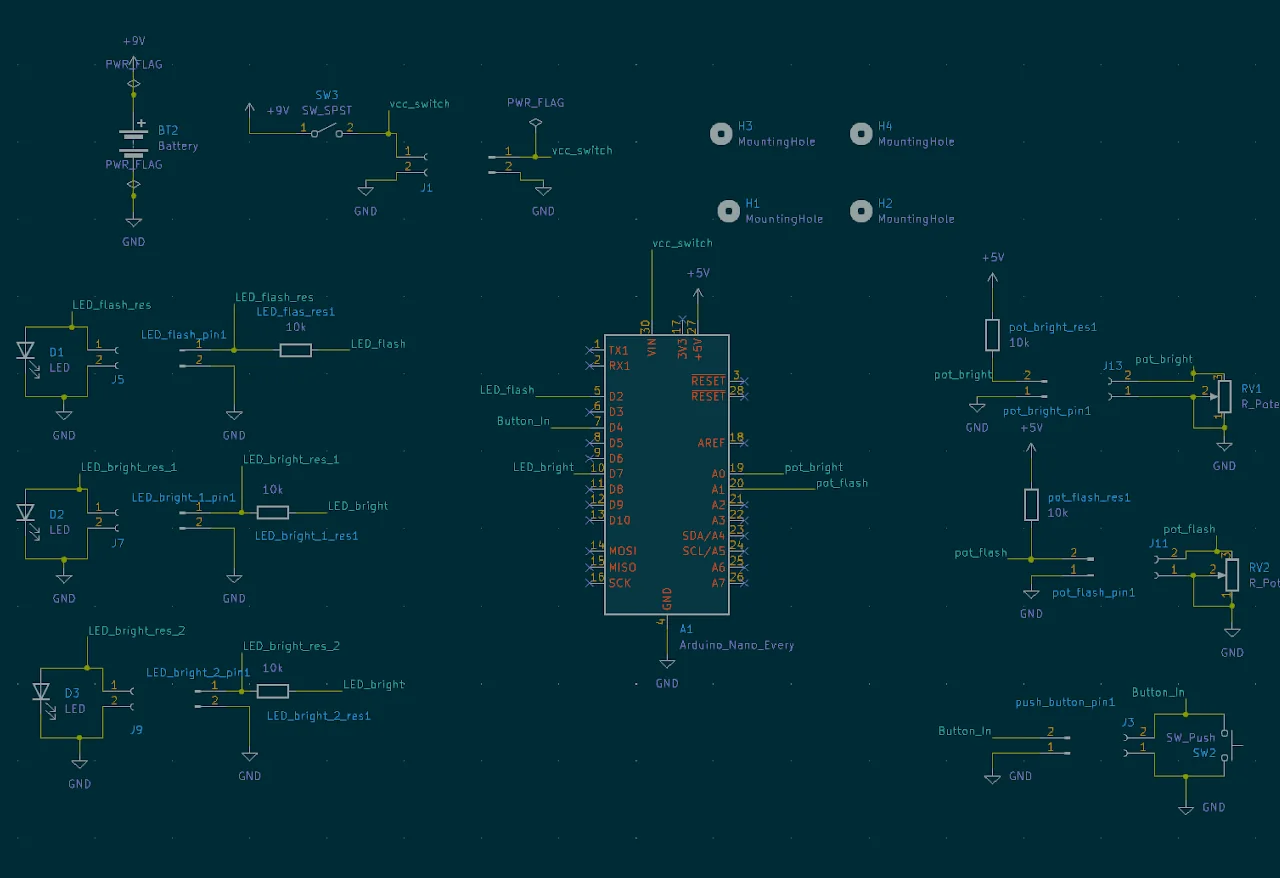
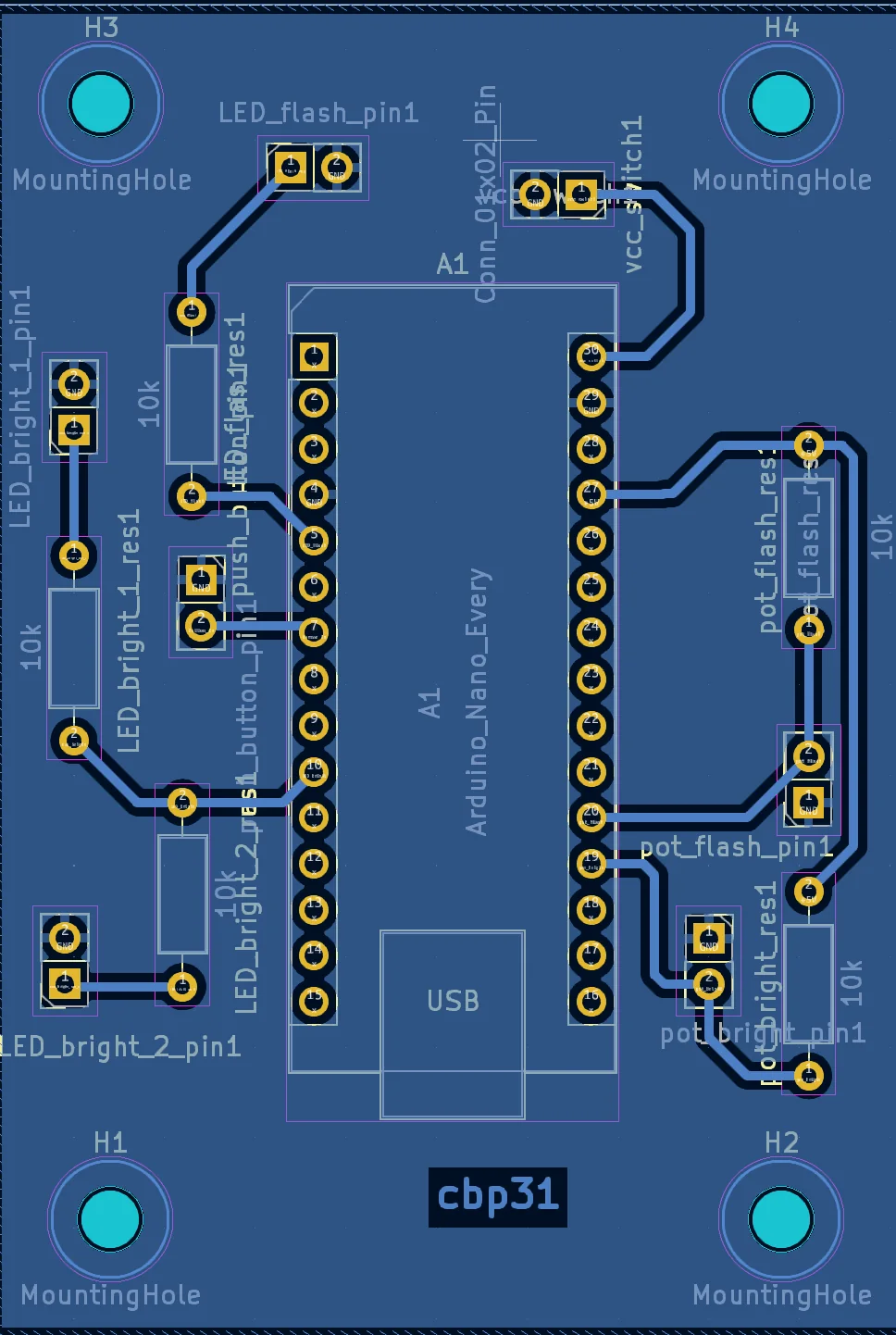
PCB (KiCad). A ground-filled board carrying an Arduino Nano Every, five resistors, and headers for the LEDs, button, switch, and potentiometers, with four mounting holes.
Firmware (C++). A state machine that idles until an interrupt-driven button press, then reads both potentiometers. It drives two LEDs at a PWM brightness set by one pot for 5 seconds, and flashes a third LED at a rate set by the other pot for 10 seconds. A 1 Hz heartbeat on the onboard LED confirms the code is running.
Outcome. A+, and I was asked to TA the course the following semester and continued TA-ing through graduation (January 2025 – May 2026).
Next project
Auralert · Seizure prediction wearable