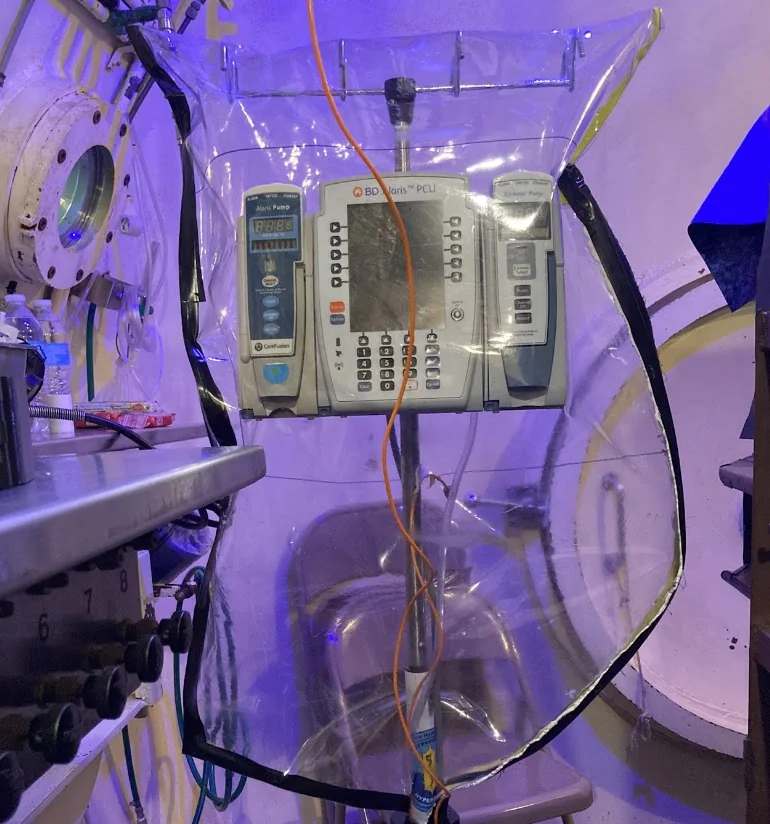
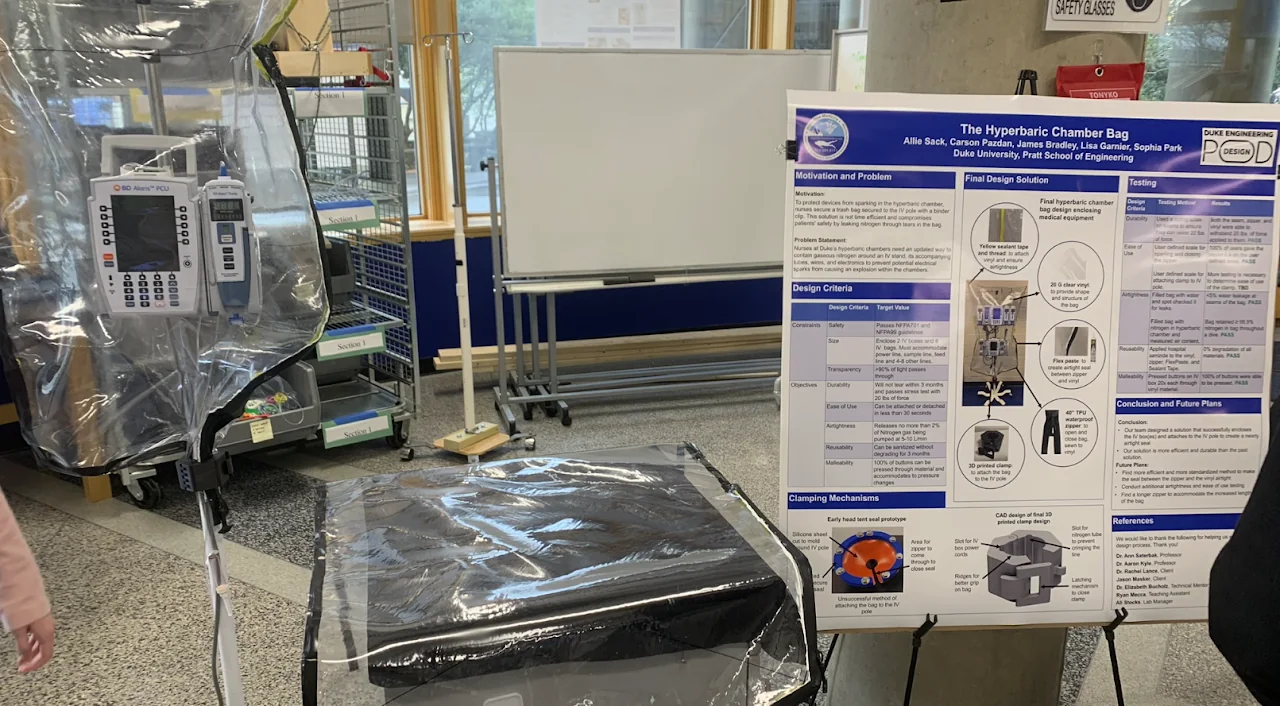
Problem. Duke's hyperbaric chambers run at high pressure with a high concentration of oxygen. Our clients told us a single electrical spark in that environment could cause an explosion severe enough to level the building. To keep the IV pumps inside surrounded by nitrogen, nurses were covering them with a trash bag clipped to the IV pole with a binder clip. It was slow to set up, and nitrogen leaked out through tears.
Design criteria. We defined measurable targets with our clients before designing:
| Criterion | Target |
|---|---|
| Safety | Meets NFPA 701 and NFPA 99 guidelines |
| Size | Encloses 2 IV pump units and 8 IV bags, plus power, sample, and feed lines |
| Transparency | >90% light transmission |
| Durability | No tearing within 3 months; seams withstand 20 lb of force |
| Ease of use | Attach or detach in under 30 seconds |
| Airtightness | Releases no more than 2% of nitrogen pumped at 5–10 L/min |
| Reusability | Survives hospital disinfection for 3 months |
| Usability | Every pump button can be pressed through the material |
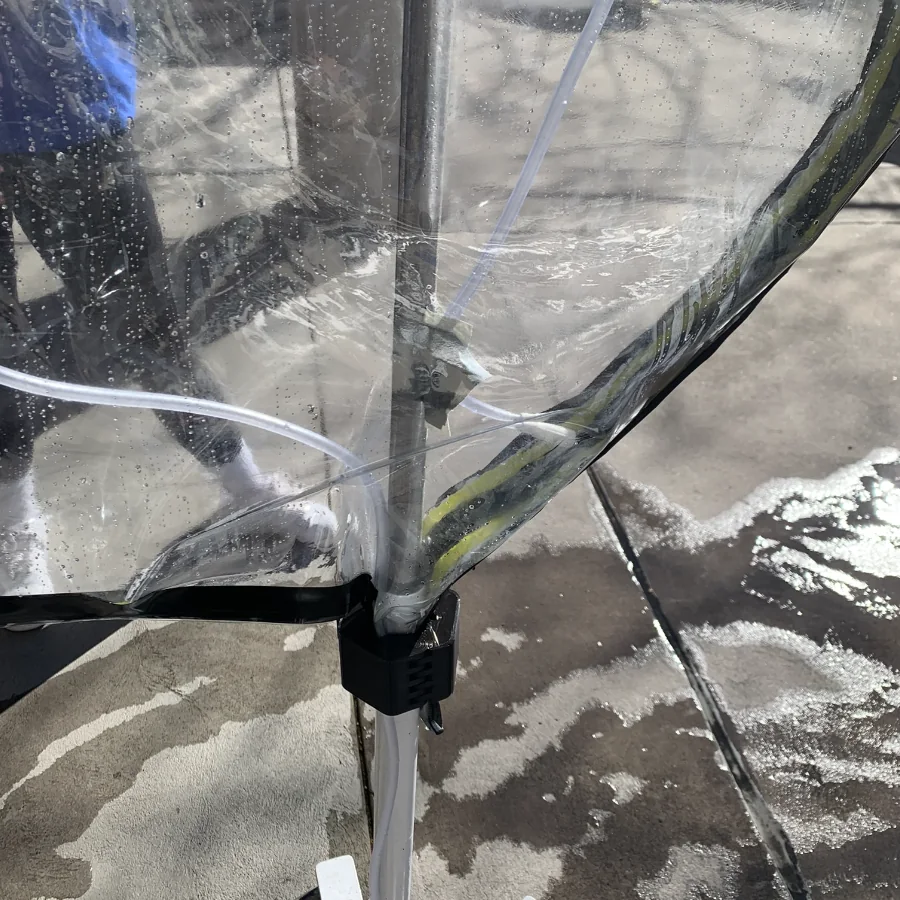
Design. 20-gauge clear vinyl gives the bag its shape and lets nurses see and press the pump screens. A 40-inch waterproof TPU zipper, sewn in and sealed with Flex Paste, opens it, and sealant tape and thread close the seams. A 3D-printed clamp with slots for the nitrogen line and power cords attaches the bag to the IV pole without pinching anything. It replaced an earlier silicone "head tent" seal that didn't work.
Testing
| Criterion | Method | Result |
|---|---|---|
| Durability | Spring scale on seams, zipper, and vinyl | Withstood 20 lb. PASS |
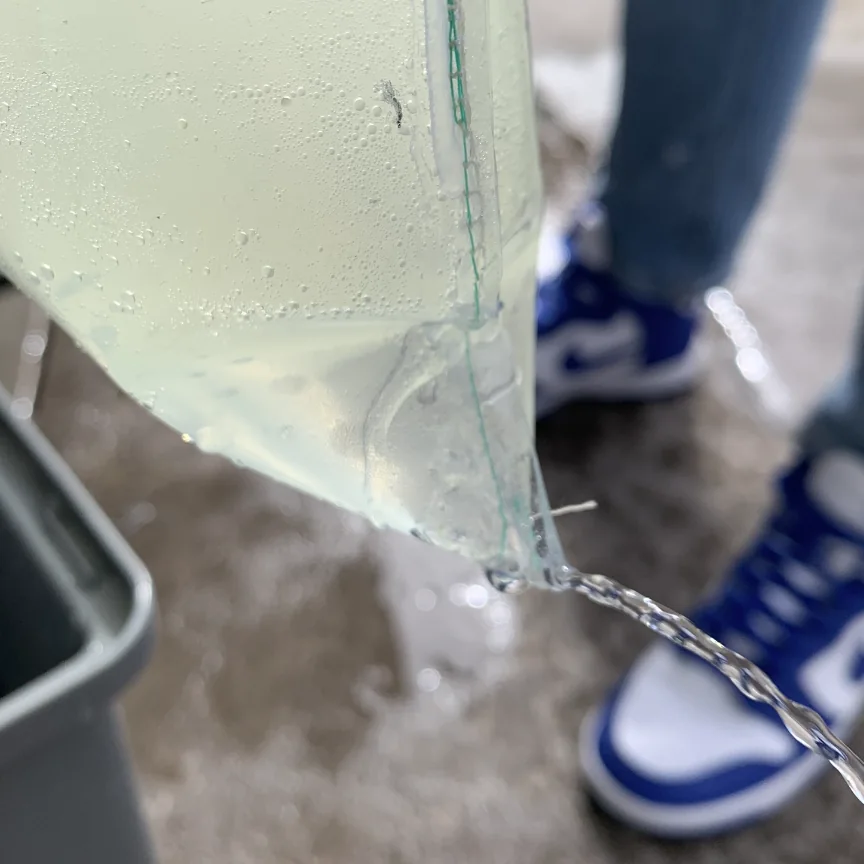
| Airtightness | Water fill, spot-check seams | <5% leakage at seams. PASS |
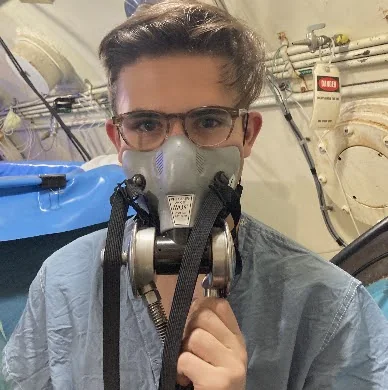
| Airtightness | Nitrogen fill during a chamber dive | ≥99.5% nitrogen retained through a dive. PASS |
| Reusability | Hospital disinfectant on every material | 0% degradation. PASS |
| Usability | Each pump button pressed 20x through vinyl | 100% pressable. PASS |
| Ease of use | User rating of the zipper | All users rated ≥4. PASS |
Outcome. We presented at the EGR 101 poster session, where nurses from the hyperbaric unit called it a clear improvement over the trash-bag method.
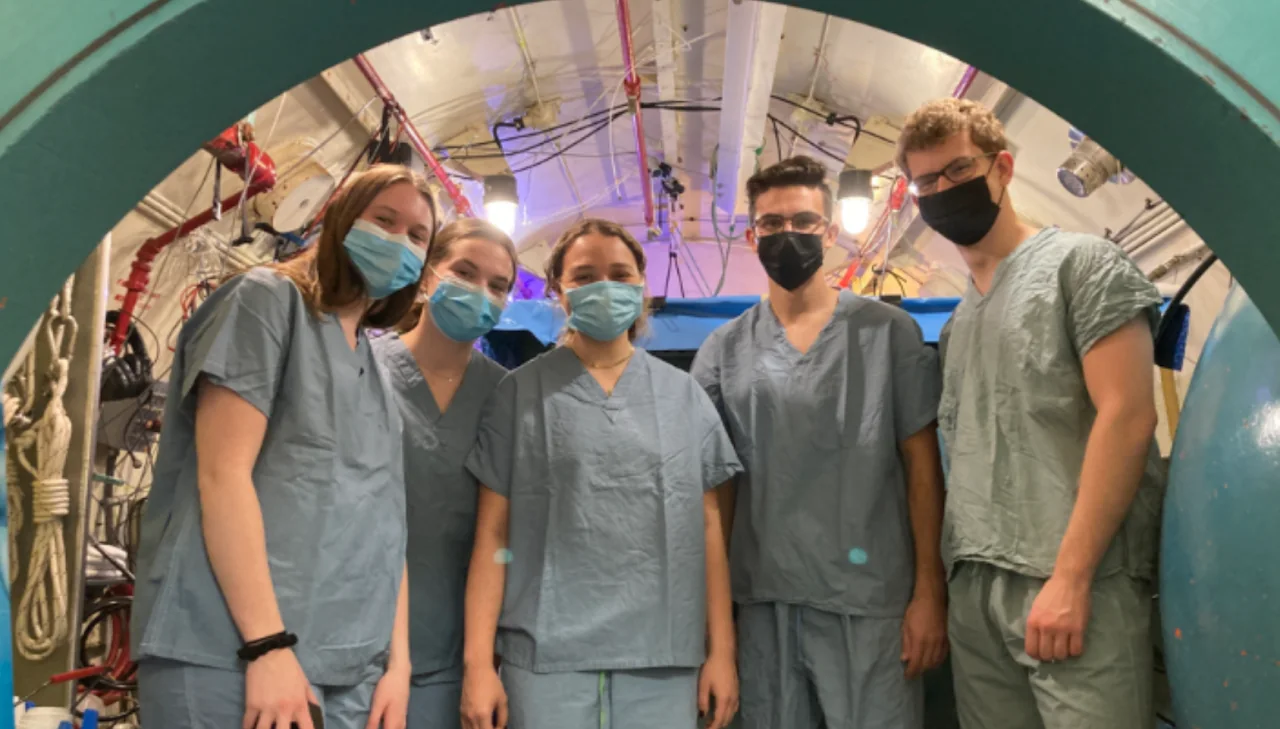
What I learned. Our early prototypes failed leak testing over and over, and it wore on the team. What got us through was treating each failure as data about where the seal broke, not as a verdict on the design, and combining the best parts of everyone's ideas into the final version. It was my first design project, and it's where I learned that a good test tells you exactly what to fix next.
Next project
MedTech Prototyping Lightbox · Enclosure, PCB, and firmware