At a Glance

- What: A 3D-printed prosthetic arm for a high school student with a limb difference, built around a modular attachment system so one custom-fitted socket can take many interchangeable tools.
- My role: Team lead. I came up with the modular concept, designed the attachment interface and three of the attachments, and led a rotating team of about 10 students through design and testing.
- Output: Our attachments were shared to eNable's open-source library, so other chapters can adopt the swap-and-lock system.
The Idea: One Socket, Many Tools
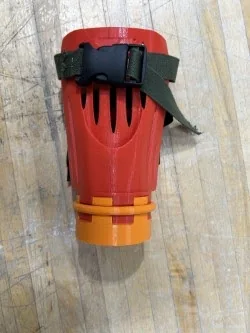
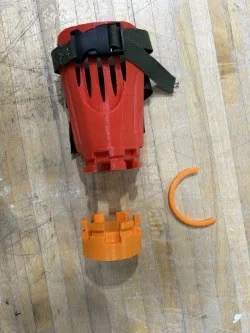
Our first design was a traditional 3D-printed hand, opened and closed by strings driven by wrist movement. It worked, but a single hand can't do everything a person wants to do. I proposed separating the part that has to be custom-fitted (the socket) from the part that does the work (the tool). Each attachment shares a common tabbed base that locks into the socket with a twist and is held by a retaining clip, so the user can swap tools without refitting the arm.
Attachments
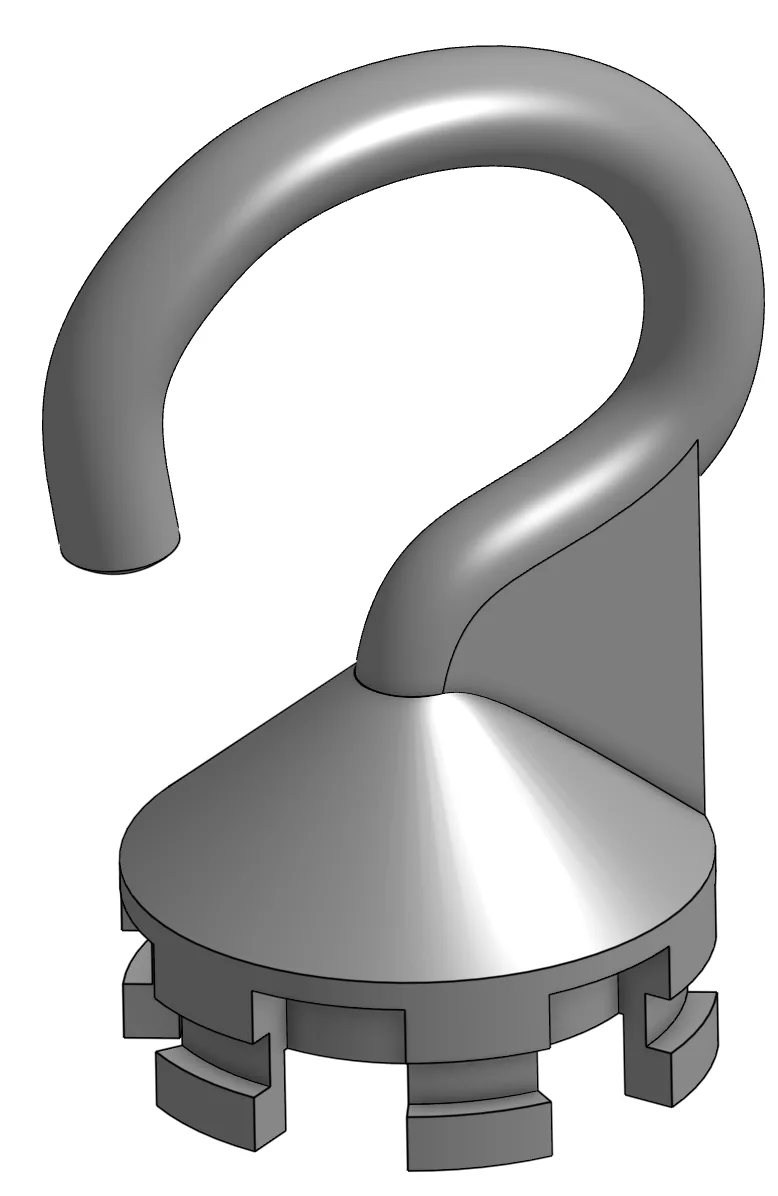
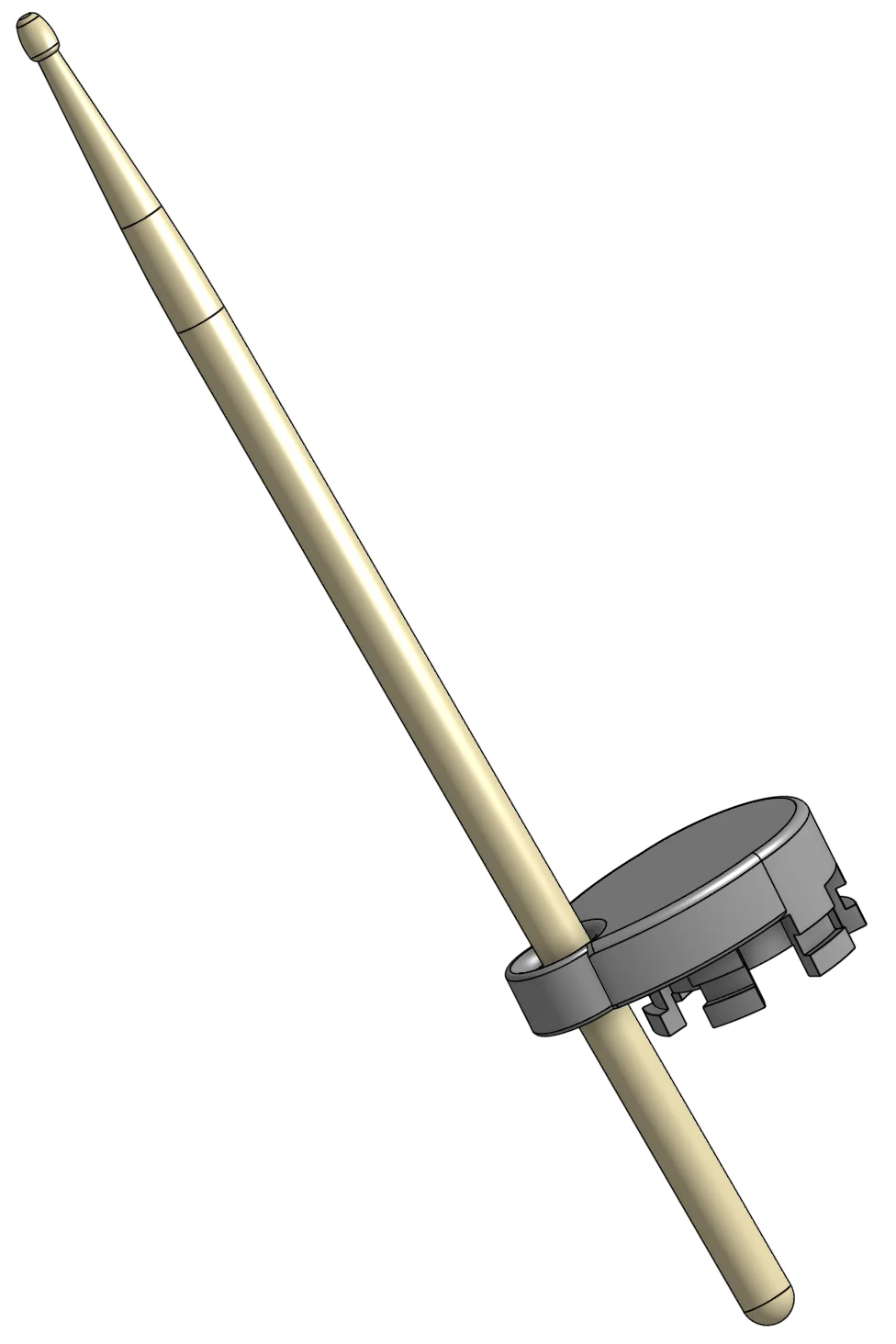
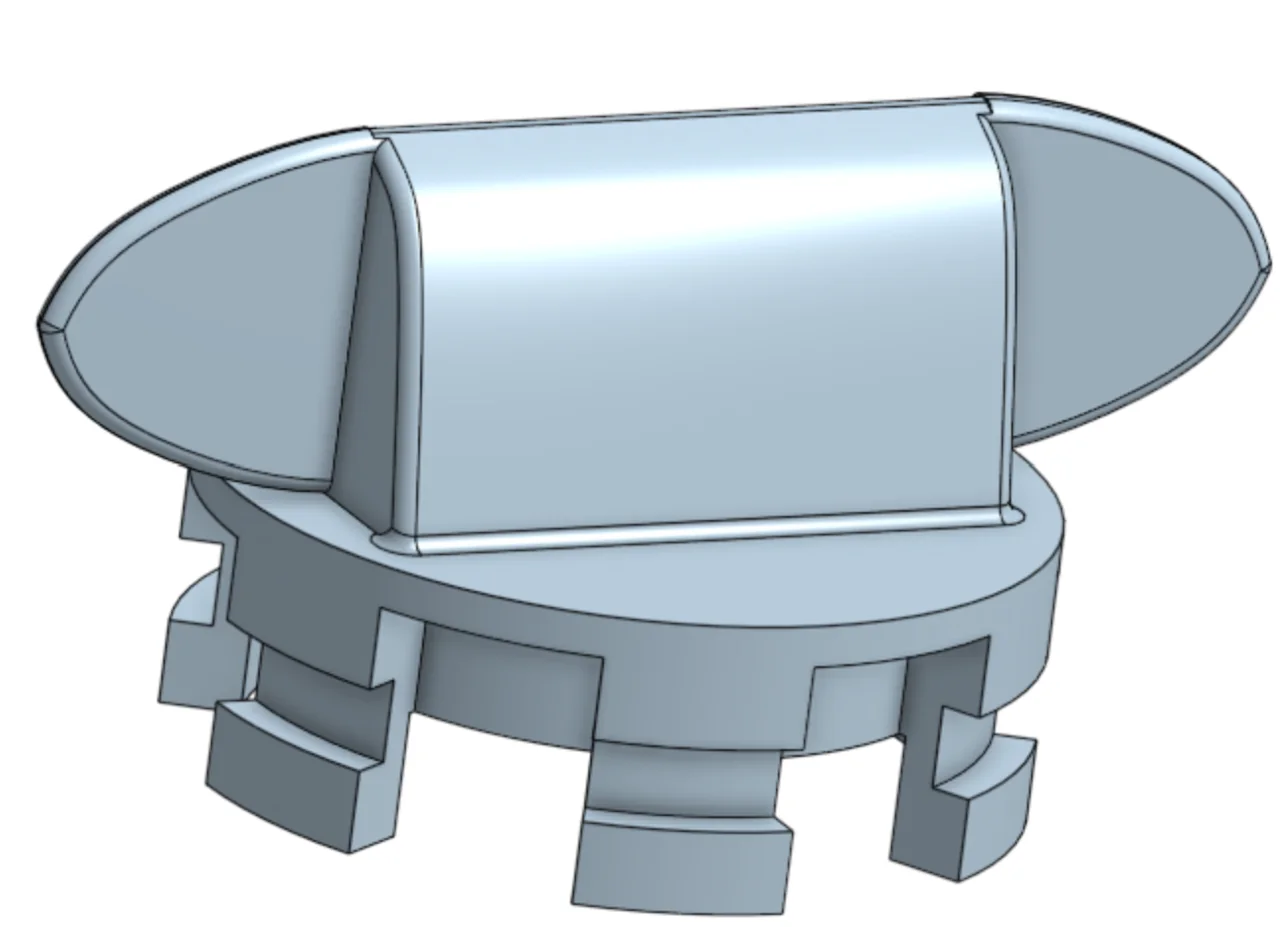
The team's library included the original string-driven hand, a fork, and more. I designed three: the hook, a drumstick holder, and a guitar pick holder.
Load testing: We tested the hook by hanging a bucket from it and adding sand until it failed. It held 10 lb and failed at roughly 11.2 lb.
Why Modular Worked Beyond One User
- It scales across eNable. eNable is an open-source effort to 3D-print prosthetics, with chapters at schools across the country. If other chapters adopt the swap-and-lock interface, they only have to design the socket that fits their recipient; the attachment library already exists.
Why Modular Worked for the Team, Too
The modular interface did two things beyond the user's needs:
- It made delivery realistic. The socket and interface only had to be solved once, so the team could reliably get a working device to the user instead of betting everything on one complex hand.
- It gave newer members a real project. With the interface fixed, a less experienced member could design a complete attachment on their own. That let me bring people onto the team with varying experience, teach CAD and design-for-printing on a scoped problem, and still produce parts the user could use.
What I Took Away
Most of the team were underclassmen, and membership changed from semester to semester. Leading it taught me to onboard people quickly and to give feedback in a way that pushed them to build better and keep learning. For many of them, Duke eNable was where they picked up CAD outside of class.
Next project
Motor Cortex Decoder · Population-vector decoding in Python