At a Glance

- Company: Blur is a product development and contract manufacturing firm in Cary, NC that takes medical devices from concept through launch.
- My role: Engineering intern on client programs. Two projects: a production-intent enclosure for a handheld device, and an automated calibration system for a fluid-warming device.
- Note: Both were client programs. The enclosure is proprietary, so that section describes my approach without images. The calibration rig was test equipment I built, not part of the product, so I can show it.
1. DFM Enclosure for an At-home Dry Eye Device
I designed the enclosure for a handheld device people use at home to treat dry eye disease with heat and a gentle massaging motion against the lower eyelid. The assembly combined an injection-molded plastic housing, a CNC-machined metal tip that contacts the eyelid, buttons, and internal electronics. I took it from foam mockups through CAD and 3D-printed prototypes to a production-intent design for injection molding.
Designing Around the User
The device is used with an unusual rubbing motion right against the eye, so ergonomics drove the form. I started with foam mockups to work out hand position and grip for that motion. The metal tip had to conform to the curve of the eye through the lower eyelid, and its shape set the angle the device is held at, so the housing was built around the tip rather than the other way around. 3D-printed prototypes then let me dial in spacing and feel in the hand, and confirm that the snap fits, crush ribs, and interlocking features worked before committing to tooling.
Designing for Injection Molding
- Held a uniform wall thickness across the housing and added draft angles so the part could eject cleanly from the mold.
- Avoided overhangs so the part could be molded and ejected without them catching.
- Joined the two housing halves with an interlocking male/female lip along the seam, plus three bosses on one half that receive crush ribs on the other. The bosses both hold the halves together and stiffen the shell, so it doesn't flex when the user presses it against the eye. That makes the device feel more solid and protects the electronics inside.
- Used snap fits at the bosses to secure the two halves.
Tolerance Stacking: Machined Tip to Molded Housing
The critical interface was where the CNC-machined metal tip seats into the molded plastic housing. The two parts come from different processes with different tolerances, so I stacked the tolerances across that interface to check the fit. Based on the stack, I reduced the mating dimensions on the plastic housing so the metal tip would seat snugly.
2. Automated Temperature Calibration System
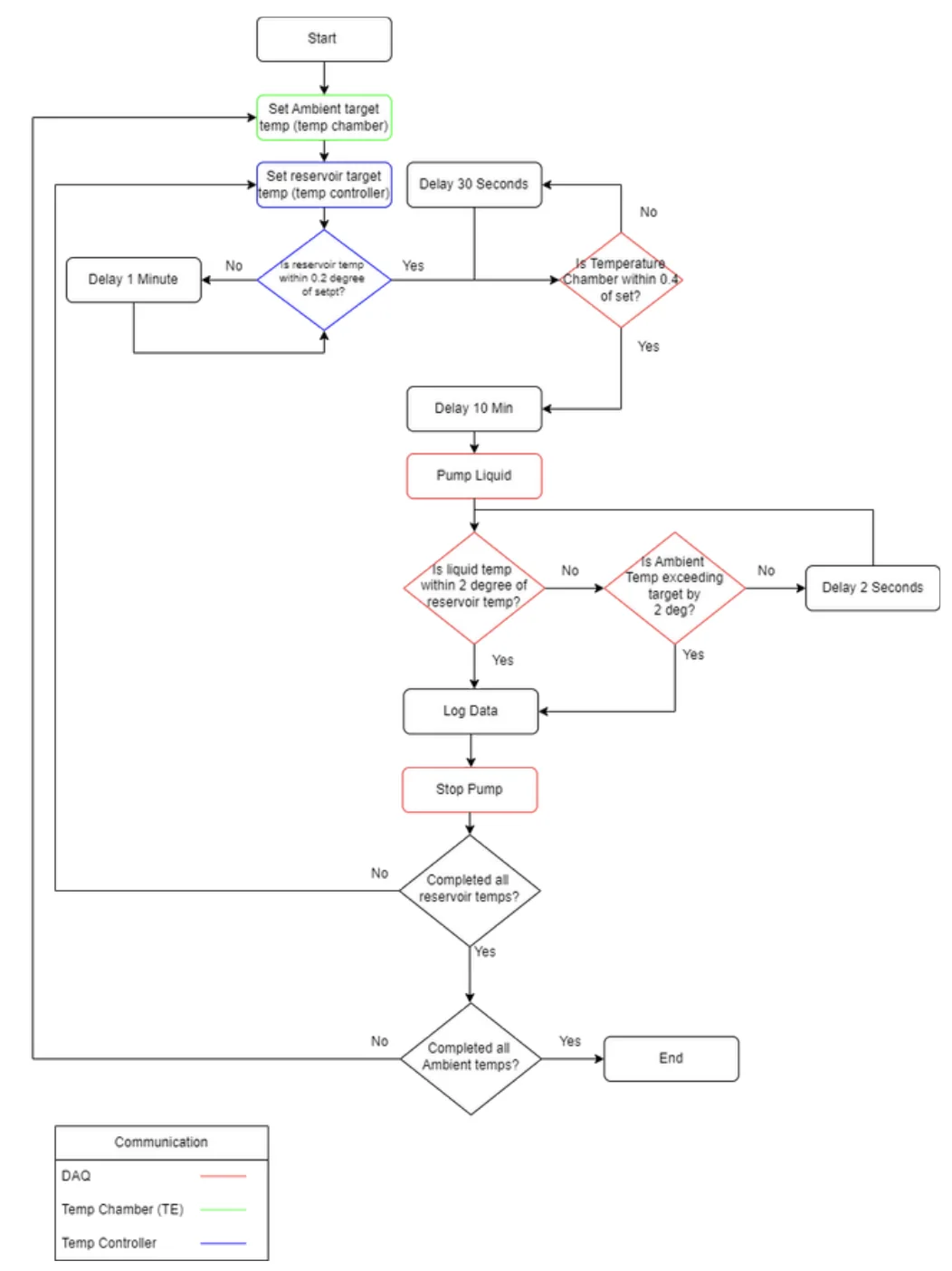
The client's device warms fluid for transfusion, and a design change to its temperature sensor threw off its readings. Recalibrating meant measuring the sensor across a full matrix of ambient and fluid temperatures, which was done by hand: a technician set the conditions, waited, and read a thermometer. It took days and was hard to repeat. I developed a GUI-controlled test flow that was able to run through the full temperature testing matrix autonomously.
The Rig
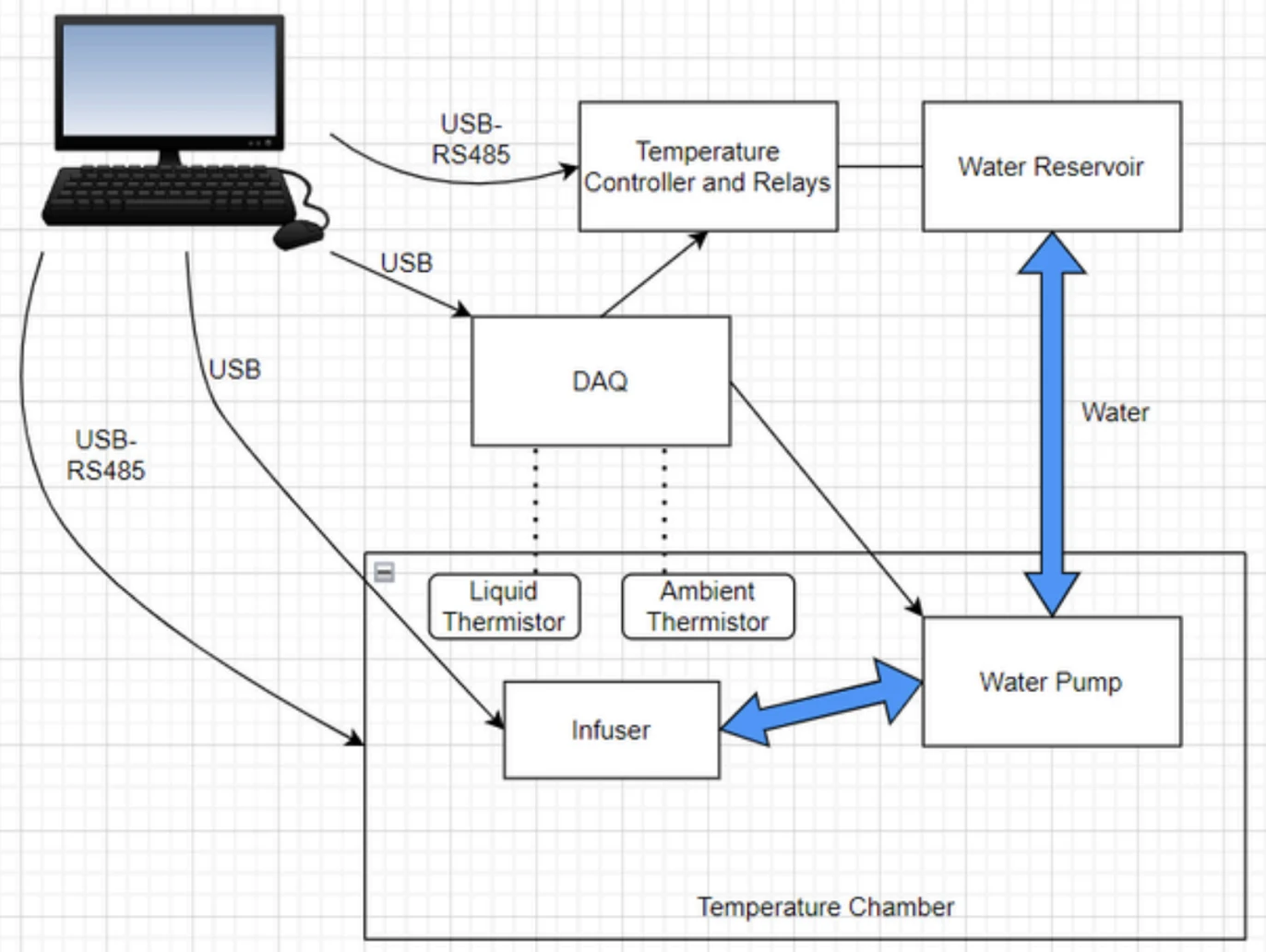
- A test chamber sets the ambient temperature around the device.
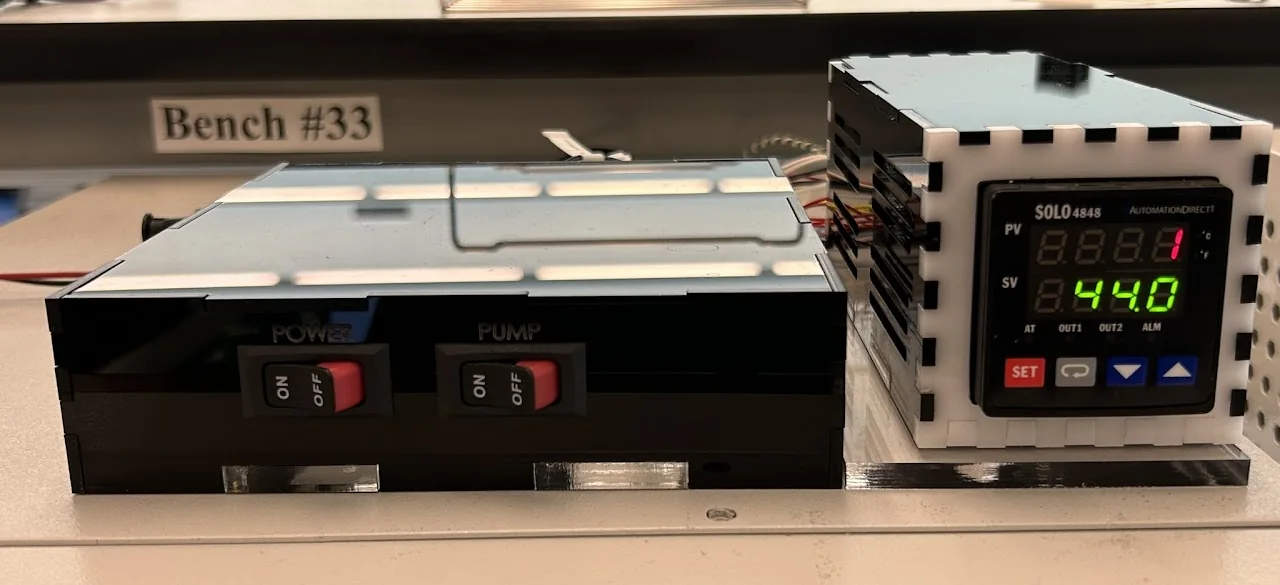
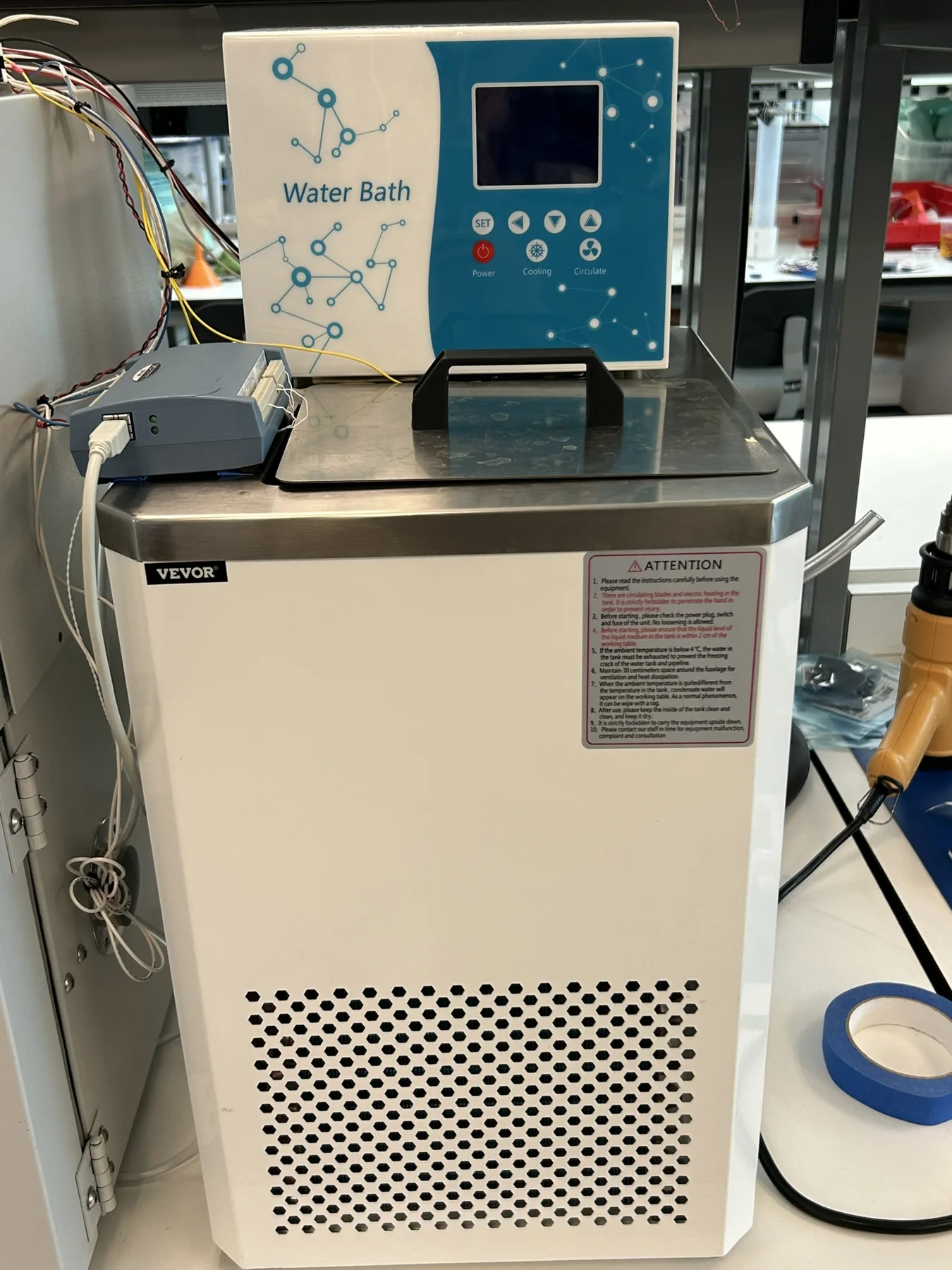
- I repurposed a water chiller as the reservoir, rewiring it so a panel temperature controller drives its heating and cooling through solid-state relays.
- A pump circulates reservoir water past the device's sensor and back, with thermistors in the chamber and in the fluid line.
- A USB DAQ reads the thermistors and switches the pump. The device streams its own sensor voltages to the PC.
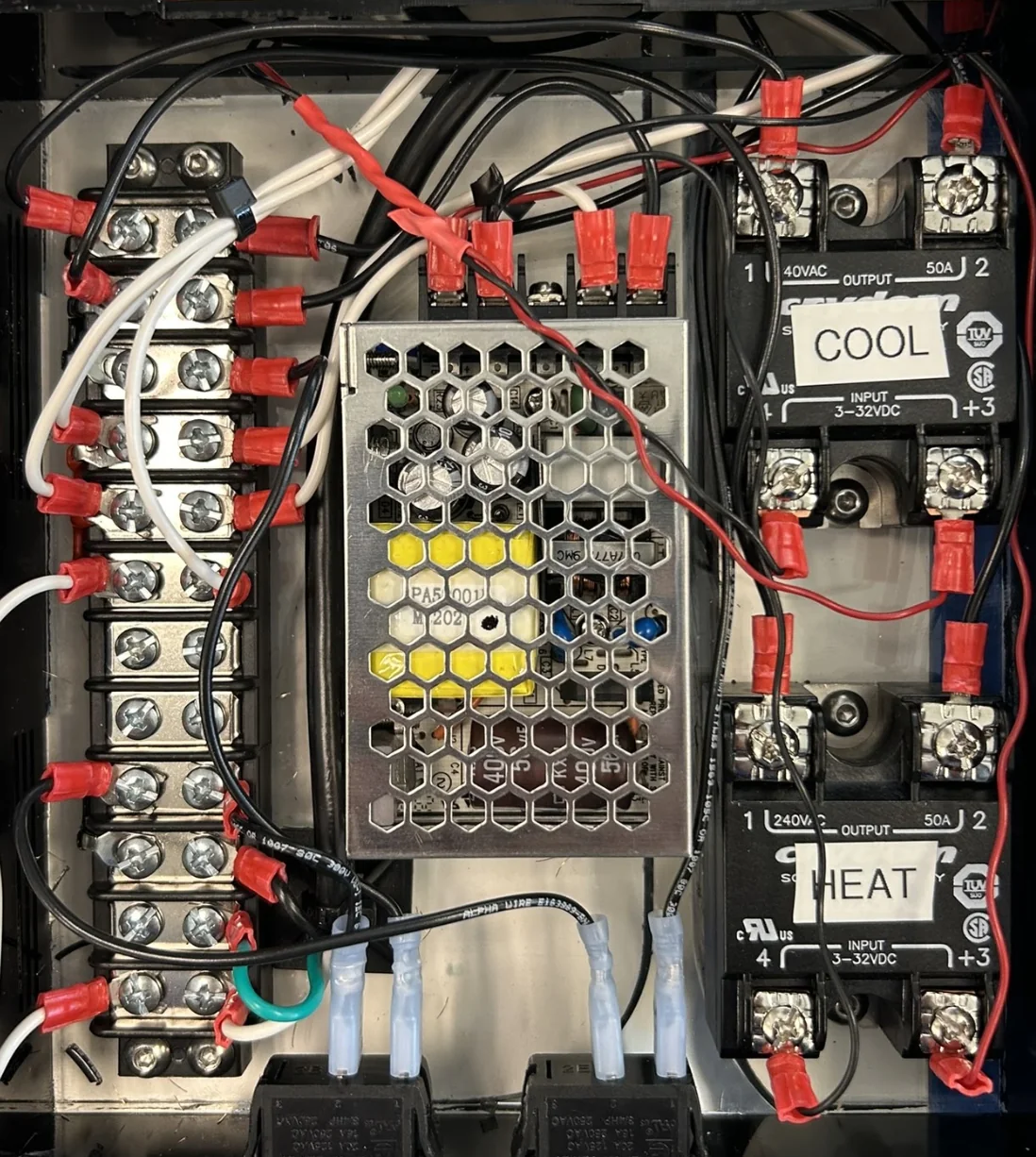
The Software
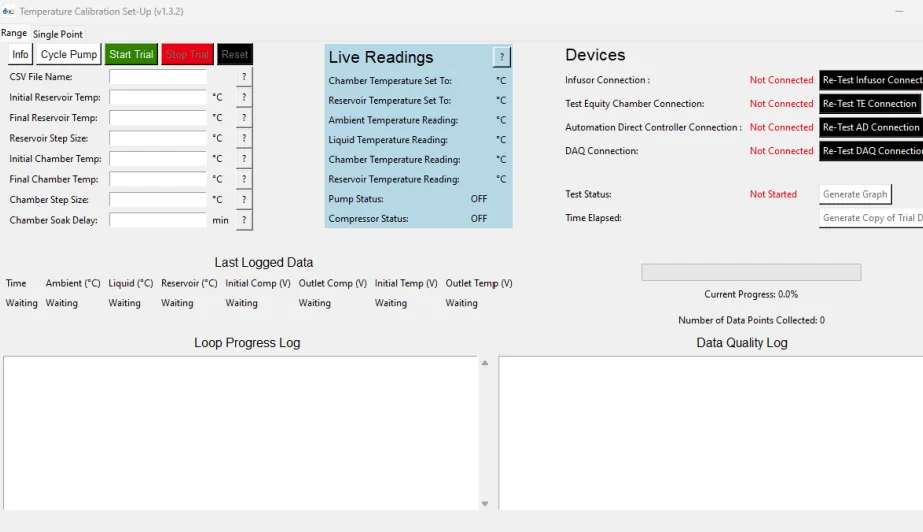
I wrote a Python GUI that coordinates four USB instruments at once: the chamber and reservoir controller over Modbus RTU (pymodbus), the DAQ (mcculw), and the device's data stream.
- Nested control loop: set ambient, wait until the chamber is within 0.4°, set the reservoir, wait until it's within 0.2°, soak, pump, log once fluid temperature settles, then step to the next combination.
- Responsive UI: the first version froze during runs, so I moved the test loop onto a background thread. Live readings, progress, and logs keep updating over a multi-day trial, and trials can be paused and resumed.
- Data safety: every point is appended to a CSV as it's taken, so a crash loses nothing. A "copy trial data" button lets engineers analyze mid-run without touching the live file.
- Data quality: a separate log flags suspect points, such as a thermistor reading knocked off by a water surge, and a Single Point mode re-runs just those points.
- Hand-off: at the end of a trial it builds an Excel workbook with the analysis plots. I packaged it as a standalone .exe with PyInstaller and wrote a 23-page user manual so other engineers could run trials without a Python setup.
Result: Reduced testing time by 40%, with unattended operation and more repeatable data.
Next project
Duke eNable Team Lead · Modular prosthetic arm